
What makes a film a soccer film?

Ever since we founded the Kicking + Screening Soccer Film Festival in 2009, people have asked us, What makes a film a soccer film?

It’s a question that, frankly, we had never contemplated before. Our team was — and still is — steeped in the game, including lifelong players, ex-pros, journalists, investors, marketers, and content creators. What made a film a soccer film was always self-evident to us. 

But the question has resonated with us over the years. Often, as we screen festival submissions, we find ourselves asking: Is this really a soccer film?

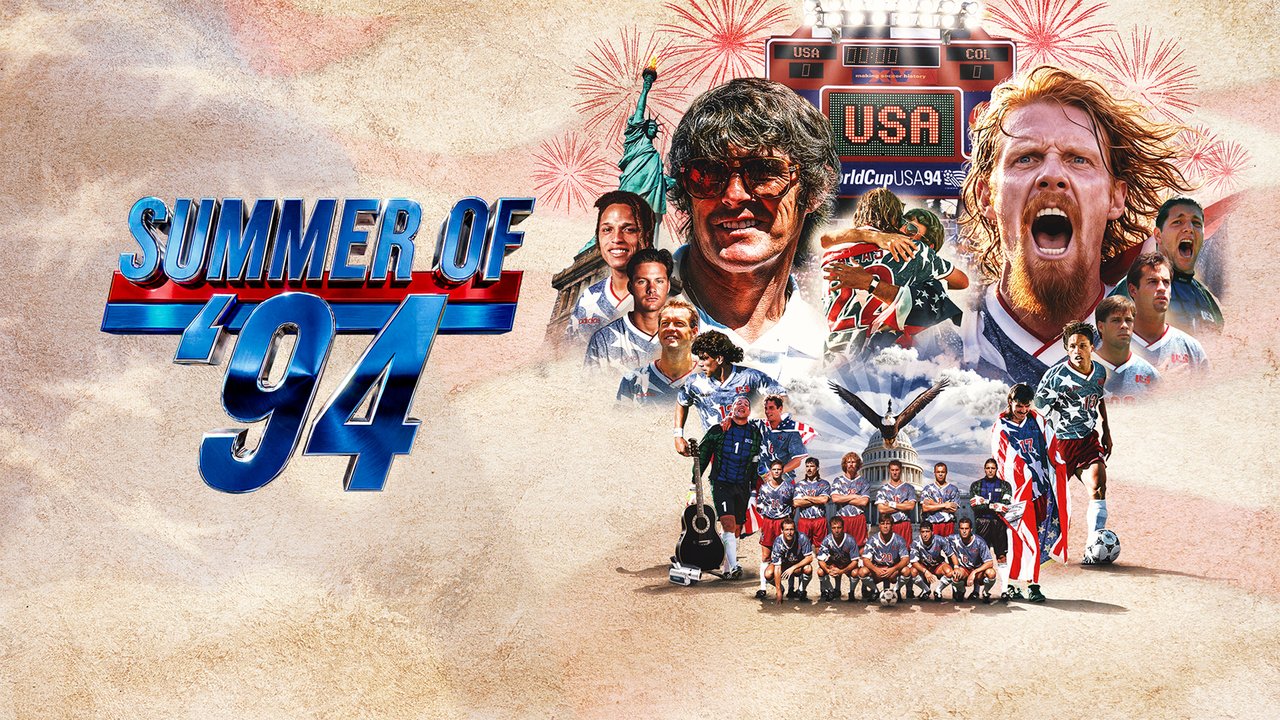
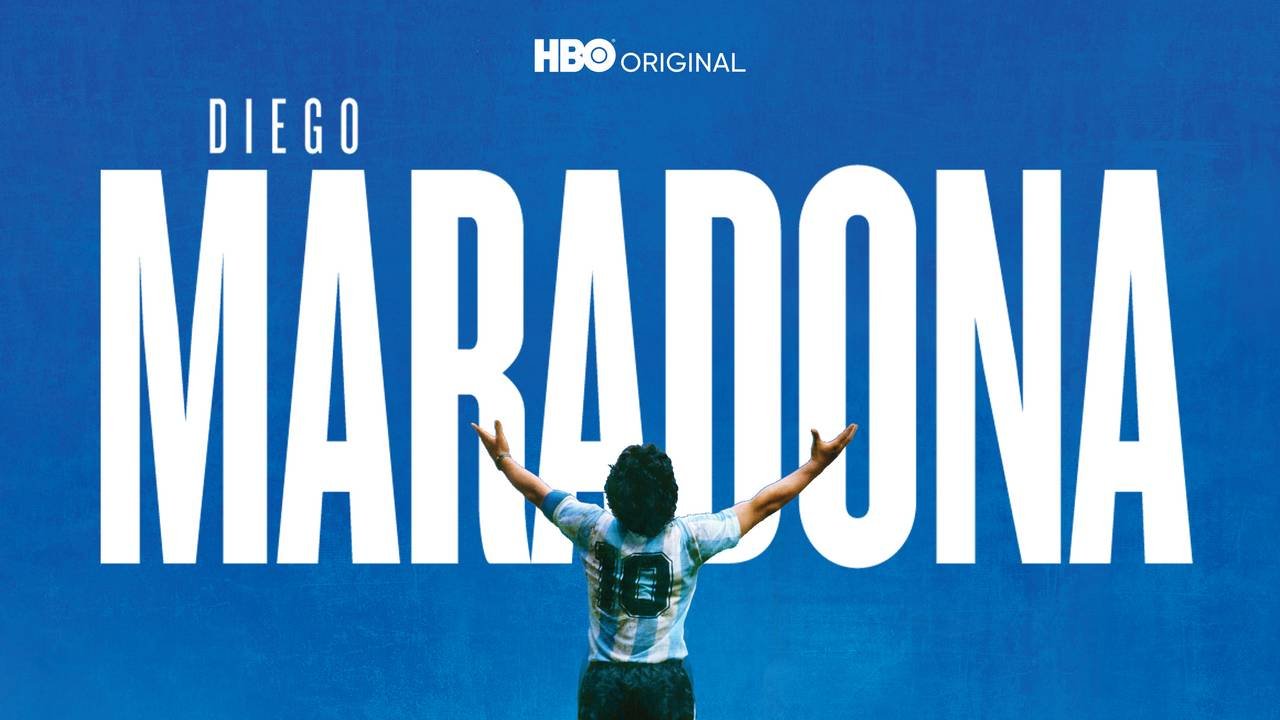
Usually, the answer is obvious. For example, behind-the-scenes documentaries revolve around action on the field, such as Les Yeux dans les Bleus, Zidane: A 21st Century Portrait, Diego Maradona, and The End of the Storm, are clearly soccer films.

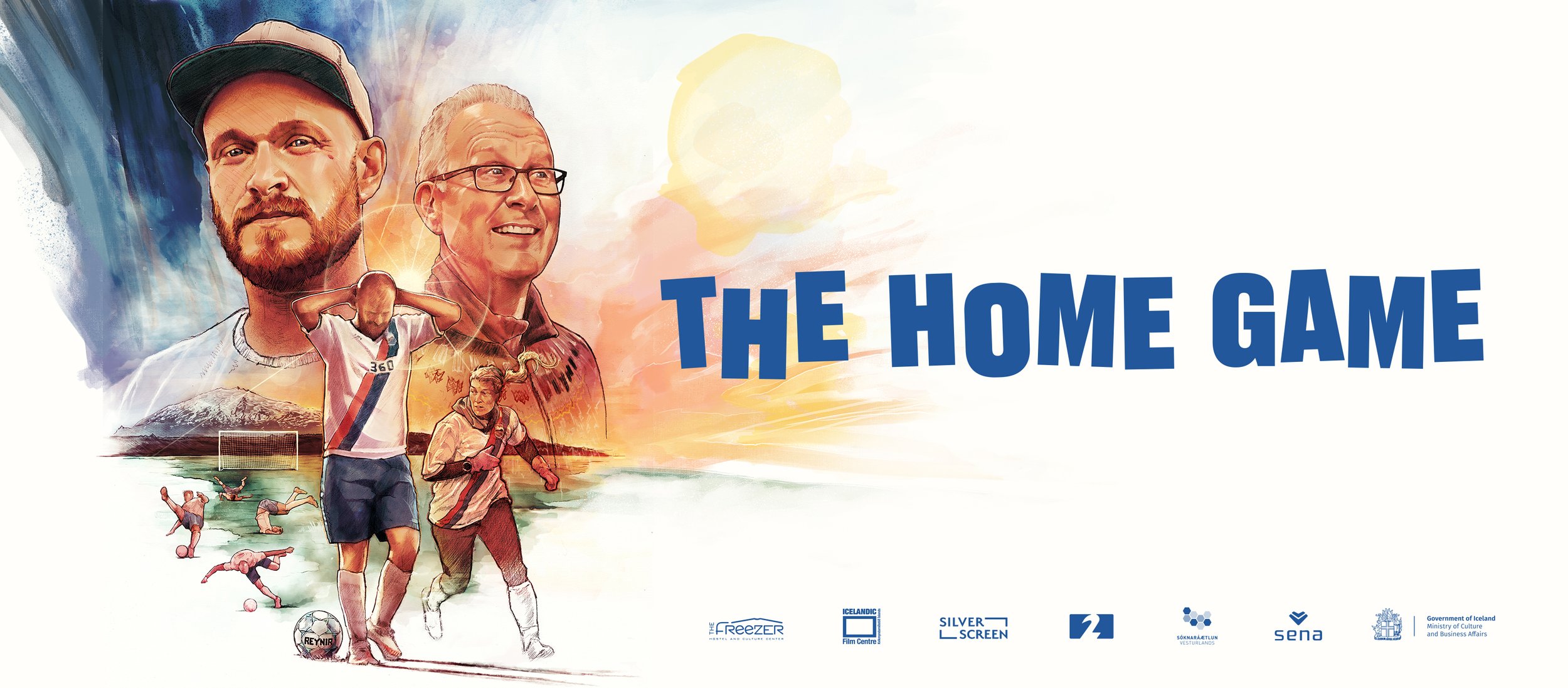
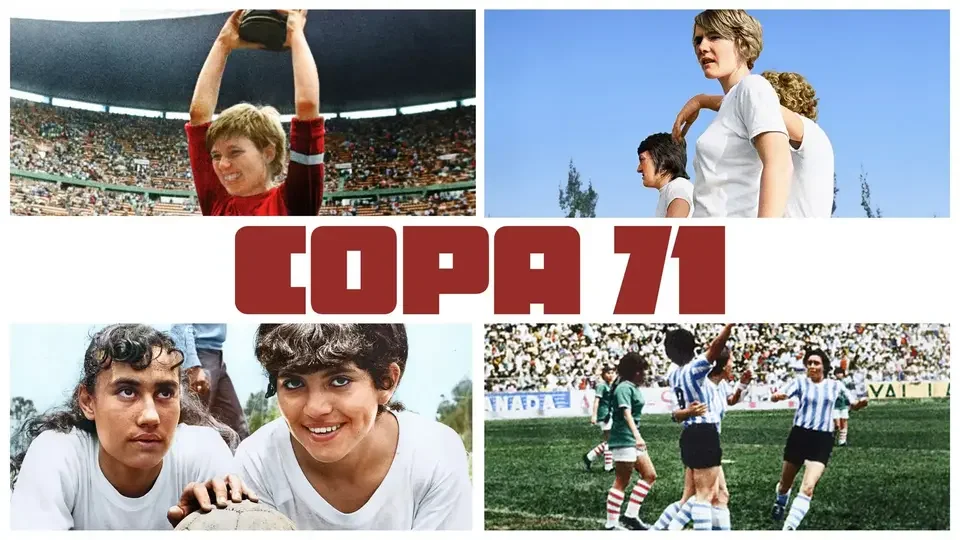
So too with documentaries that explore the culture around the game. The themes of these films are universal to sports — the passion of fans (e.g., Fever Pitch; Argentina Fútbol Club), the community impact (e.g., The Home Game; Soccertown USA), the intersection of politics and sports (e.g., Mundial: The Highest Stakes; Football Rebels), the business side of the game (e.g., FC Barcelona Confidential; Soka Afrika), or a hero’s journey (e.g., Next Goal Wins; Rise & Shine: The Jay DeMerit Story).

Because soccer or soccer culture is central to the narrative, they are, to us, soccer films. Plus, in our minds, soccer’s unique culture and history make these stories richer than they are in other sports. 

Fictional films are more complicated. Certain movies, like Victory, Rudo y Cursi, or Bend It Like Beckham, are obviously soccer films. Again, the game is central to the story.

Others are less obvious. There are many films in which soccer is a significant part of the plot, but the story does not hinge on the game. 

We then have to determine if there is enough “there” there. Is the soccer integral enough? Would a soccer fan feel a connection to the soccer element of the story? These questions lead us to say the brilliant Scottish film Gregory’s Girl is a soccer film, but 10 Things I Hate about Youwhich includes a young Julia Stiles famously showing off her real-life soccer skills — is not. 

Finally, there is a special category of movies that are definitely not soccer films but sneak in fragments of the game that fanatics like us notice and remember forever. These moments are like little Easter eggs that make us feel like cool insiders because we get the reference that non-socceristas (especially in the United States) don’t. 

A few examples are the “Arsenal offside trap” line in The Full Monty and the Pele speech in the wrestling film Vision Quest.

In the end, what we’ve learned is that there is no one thing that makes a film a soccer film. Soccer-ness is just a gut feeling. 

To steal a line from U.S. Supreme Court Justice Potter Stewart, you know a soccer film when you see it.

The Beautiful Escape: Why "Victory" Remains the Ultimate Soccer Movie

Here at Kicking + Screening, we exist at the intersection of film and soccer. We’ve showcased hundreds of films that capture the passion, politics, and poetry of soccer.

But, for us, there’s one film that stands as the GOAT of the genre—a cinematic curiosity so wild, so earnest, and so wrapped in the mystique of the game that it is the eternal soccer film cult classic.

We’re talking, of course, about John Huston’s 1981 “masterpiece” Victory.

Depending on where you live, you might know it as Escape to Victory. You might know it as "that movie where Pele does the bicycle kick." Or "where Sly Stallone plays goalkeeper."

Regardless, Victory — and its impact and legacy — can’t be ignored. It is one of the most unexpected World War Two films from an Oscar-winning director ever. With one of the most unexpected ensemble casts, featuring accomplished actors (Michael Caine, Max von Sydow, Sylvester Stallone, Tim Piggott-Smith, etc.) and legendary footballers (Bobby Moore, Ossie Ardiles, Kazimierz Deyna).

On the 34th anniversary of its release, we’re taking a moment to pay homage to this brilliant film that continues to inspire us as festival organizers, as soccer fans, and as people who wish they could execute a perfect bicycle kick.

The Premise: The "Great Escape" Meets "Rocky"

The genius of Victory lies in its audacious concept. It takes the classic WWII prisoner-of-war escape formula (think The Great Escape) and merges it with a classic underdog sports movie structure (think Rocky, fittingly enough).

Set in a Nazi POW camp, the legendary Michael Caine stars as Captain John Colby, a former English professional player roped into organizing a match between a team of Allied prisoners and a German team as a propaganda stunt. Colby sees it as a way to boost morale; his commanding officers see it as the perfect cover for a mass escape from the stadium in occupied Paris.

Enter Sylvester Stallone as Captain Robert Hatch, a brash American escape artist who knows nothing about "soccer" but is determined to use the match to break free. He’s eventually forced into the unlikely role of the team's goalkeeper.

The final third of the movie is dedicated to the match itself—an epic showdown that takes place in front of thousands of roaring French citizens and senior Nazi officers. The stakes are simple: win the game, or gain your freedom.

The Trinity: Caine, Stallone, and Pelé

The film’s legacy is anchored by its surreal and arguably insane star-powered trinity. You have never seen a cast like this before, and you likely never will again.

  1. Michael Caine: Caine brings a weary authority to the role of Colby. He is the stabilizing force, the man who understands that for his fellow soldiers, the chance to compete fairly—to be athletes again, not just prisoners—is its own form of resistance. Caine gives the film its heart and its dramatic grounding.

  2. Sylvester Stallone: Fresh off Rocky, Stallone is, well, Stallone. His performance as Hatch is pure 1980s American ego, filled with hard stares, faux toughness, and comedic misunderstandings of the rules. While he reportedly struggled with the actual goalkeeping—even breaking a finger during filming—his underdog energy fits the film’s narrative arc perfectly. His climactic penalty save is pure cinema.

  3. Pelé: And then there is Pelé. Victory isn't just a movie starring Pelé; it’s a showcase of his genius as a player and a personality. Playing Corporal Luis Fernandez of Trinidad, Pelé brings effortless joy to the screen. Even surrounded by movie stars, he is the most magnetic presence. When he has the ball, the film becomes a ballet.

The Legends on the Pitch

Victory is unique because it didn't rely on actors pretending to be good at soccer. The Allies’ team is a who’s who of international football legends of the 1960s and 70s.

Alongside Pelé, you see World Cup winner Bobby Moore (England), Osvaldo Ardiles (Argentina), Kazimierz Deyna (Poland), Paul Van Himst (Belgium), and numerous other pros.

The authenticity they bring to the action scenes—the quality of the passing, the first touches, the tackles—is unmatched. When they move the ball, you aren't watching stuntmen; you are watching masters of the craft.

The talent isn’t only on the Allies’ side. Werner Roth, the former New York Cosmos legend, plays Baumann, the Nazi team captain who finds himself in a penalty kick showdown — and staredown — with Stallone’s Hatch that sets up the dramatic finish to the match and the film.

The Bicycle Kick Heard 'Round the World

If Victory is remembered for only one image, it is the Bicycle Kick.

Down 4-1 at halftime, battered by German fouls and a biased referee, the Allies stage a legendary comeback. The turning point is Pelé’s moment of transcendent skill.

Injured early in the game, his character returns to the pitch for the final minutes. As a cross comes in, he rises to strike a perfect overhead volley into the corner of the net.

The stadium erupts. Even the Nazi officer who organized the match (played the great von Sydow) can’t help but stand and applaud. It’s the single most iconic soccer moment in film history, and it was executed by the man who invented the legend of the move himself.

Why Victory Matters to K+S

Victory might be campy. It might be historically inaccurate. It might be absurd that the prisoners choose to stay at halftime to finish the game rather than escape through the tunnel.

Whatever. This is Hollywood. Expect the absurd.

But, less expected, is how Victory gets to a fundamental truth of the game. Soccer, for us, is about culture, connection, unity. It’s about standing for something: for your teammates, for your community, for yourself.

At the end of Victory, the scoreline (4-4) is irrelevant. What matters is emotion that rises up in the crowd that overwhelms the Nazi guards to swarm the players and help them disappear into the freedom beyond the walls of the stadium. It's the ultimate pitch invasion.

"The Home Game" & "Oor Wally" win 2024 K+S Golden Whistle awards

The K+S Golden Whistles are awarded to the feature and short films that epitomize the joyful soccer values of K+S and truly affect our festival goers. This year, the Golden Whistles are presented to:

FEATURE: The Home Game

  • Directed by Smari Gunn & Logi Sigursveinsson, this Icelandic film about a man on a mission to bring an FA Cup game to a tiny fishing village had the entire festival cheering for the club, Reynir Hellisandur.

  • The Home Game is still on the festival circuit now, so keep your eye out.

SHORT: Oor Wally

  • Martin Lennon’s 12-minute doc on Wally the Warrior, the mascot for Scottish fourth-tier club Stenhousemuir F.C., was both hilarious and touching. A perfect encapsulation of the passion and absurdity of smalltown lower-league football.

  • Watch it here.

Past Golden Whistle winners:

Thank you, New York! Reliving the best of K+S New York 2024

K+S New York 2024 is in the books. What a tremendous event!

Big shouts to everyone who joined us in person for our first festival at Kyle Martino’s Football Cafe. Cheers to everyone who followed along on our social channels.

Seriously, we had such a blast. Here are a few highlights that stuck out to us:

  • “Soccer in America is a blank slate.” The opening night panel discussion about soccer & creativity delved into many topics. Our favorite was the belief that our game – especially in the United States – is uniquely positioned for artistic representations in film, fashion, photography, and more.

  • Art exhibits. The exclusive exhibitions of works by Alfredo Montes and Chris Payne brought the panel’s supposition to life right before our eyes. Through color and design, they showed some of the interesting ways the game is expressed.  

Closing night dance party. We invented a new activity: kickabout dancing. While the DJ spun old soul records, someone rolled a ball out on the dance floor and a Maradona biopic played on the big screen. It was the kind of brilliant improv moment that always seems to happen at K+S..

  • Chocolate soccer balls… so many chocolate soccer balls.

  • Cantona jersey giveaway: Every registered attendee of K+S New York 2024 is eligible to win a Cantona #7 Manchester United jersey, courtesy of Peter Holland founder of One United USA, the MUFC supporters group.

  • Great partners: Able Made, MUNDIAL, Athens Women’s Football Summit, Sportsology Group, and NYFEST.

  • And great films. From opening night’s history lesson about the L.A. Wolves in the 1960s to Eric Cantona’s dramatic celebration of his former club, Manchester United, we had one of the best film lineups K+S had ever scene. Thank you to all the filmmakers for their storytelling and passion.

We’ll see you all next year!

Reflecting on 15 years of soccer films and soccer friends

As we gear up for year 15 of the Kicking + Screening Soccer Film Festival this week, I thought I’d share a few thoughts about our story.

Here’s the truth: Fifteen years ago, my Kicking + Screening cofounder and friend Rachel Markus and I didn’t know what we were getting into when we decided, basically on a whim, to put on a soccer film festival.

We were younger then, with more vim and vinegar and less complicated lives. We just wanted to throw a party for soccer fans in New York and share some of the great soccer films we knew existed that had never found their audience.

That first festival in 2009 was magical. We hosted opening night at a fancy French restaurant called Opia on New York’s Upper East Side. It was owned by renowned restaurateur Fred Lesort, whom I had known from the downtown NYC rec league soccer circuit. We showed Stephane Meurier’s brilliant “Les Yeux dans les Bleus,” an insider’s view of the 1998 World Cup-winning French team. Everyone ate delicious French cuisine and drank wine. Not your typical soccer experience.

We mixed it up on other nights at K+S New York 2009. We showed FC Barcelona Confidential at a Spanish cultural center, In the Hands of the Gods at an Irish pub, and our first screening-room event — Once in a Lifetime at the Tribeca Grand Hotel. This was DIY all the way, from building the website to decorating venues to taking tickets, but it showed us something, namely, that there was an audience for these films and a craving for this kind of soccer culture.

Since then, we’ve been on a wondrous journey.

We’ve organized K+S festivals in some very expected places, like London, Liverpool, Rio de Janeiro, and Amsterdam. And we’ve done them in some very unexpected places, like Abu Dhabi, Kerala (India), and North Adams, Massachusetts. We’ve shown more than 150 films and screened probably 10 times that in order to find the best ones.

We’ve welcomed a steady stream of soccer luminaries, including everyone from French World Cup star Youri Djorkaeff to fashionista Simon Doonan, NY Cosmos legend Shep Messing to foosball world champion Tony Spredeman. More than once, soccer film historian Jan Tilman Schwab joined us, as did soccer philanthropist Ethan Zohn. Then there was that time that the late Chuck Blazer, disgraced former head of Concacaf, showed up and held court in the corner of the long-gone Tribeca Cinemas.

A frequent special guest of K+S was the journalist and author Grant Wahl. He promoted our events on his channels and participated in multiple panels. Even after his untimely and tragic death in 2022, he remains a spiritual friend of the festival.

When we launched in 2009, there was only one other film festival dedicated to soccer films — the brilliant 11mm Film Festival in Germany. Today, there are more than a dozen festivals that we know about, from Brazil to Bilbao. We like to think we played a role in building this small, but vibrant, soccer film industry.

Now, as we get ready to celebrate our 15th year with K+S New York 2024, we can reflect and admit that this K+S journey hasn’t always been easy. It’s had its ups and downs, it’s good and its bad.

But for Rachel and me — and Oliver, who joined not only the K+S family, but also married Rachel — and all the other people who have helped us along the way, it’s been worth it. There are amazingly talented filmmakers telling unique and memorable stories about this game. These stories deserve to be told. And heard or seen, and we have helped do that.

Most importantly, we’ve made lifelong friends with soccer people in our hometown and around the world. That’s the best K+S story of all.

Rachel (left) and I watch a film at K+S New York 2010.